

On Wednesday, November 19, the 76th slate of National Book Award winners was announced at a ceremony in New York City. Below, check out PW's takes on the prize winners in fiction, nonfiction, poetry, translated literature, and young peolpe's literature.

The True True Story of Raja the Gullible (and His Mother)
Rabih Alameddine. Grove, $28 (336p) ISBN 978-0-8021-6647-0
Alameddine chronicles a Lebanese family’s turbulent but happy lives in his ebullient latest (after The Wrong End of the Telescope). Narrator Raja, 63, shares an apartment in Beirut with his mother, with whom he’s very close. With disarming charm, he reflects on their recent challenges, such as the Covid-19 pandemic and Lebanon’s banking collapse. Raja, who is gay, maintains a similar tone when describing his older brother, Farouk, a family man with whom he’s often at odds: “My brother was as transparent as a piece of glass, only not as smart.” Raja also delves into his life-threatening experiences during the 1975 civil war, including when he was held captive by a soldier named Boodie, whom Raja won over by teaching him to dance. Often Raja’s adventures turn out badly, but in his telling he manages to come out on top. For instance, 30 years earlier, when he was a schoolteacher, he had sex with a man who then tried to blackmail him, threatening to out him to his colleagues. It amuses Raja now to remember that the man didn’t believe him when he claimed that everyone knew he was gay, including his mother. Throughout, the author skillfully juxtaposes unflinching depictions of war and deprivation with the narrator’s joie de vivre. It’s a ravishing performance. Agent: Nicole Aragi, Aragi, Inc. (Sept.)

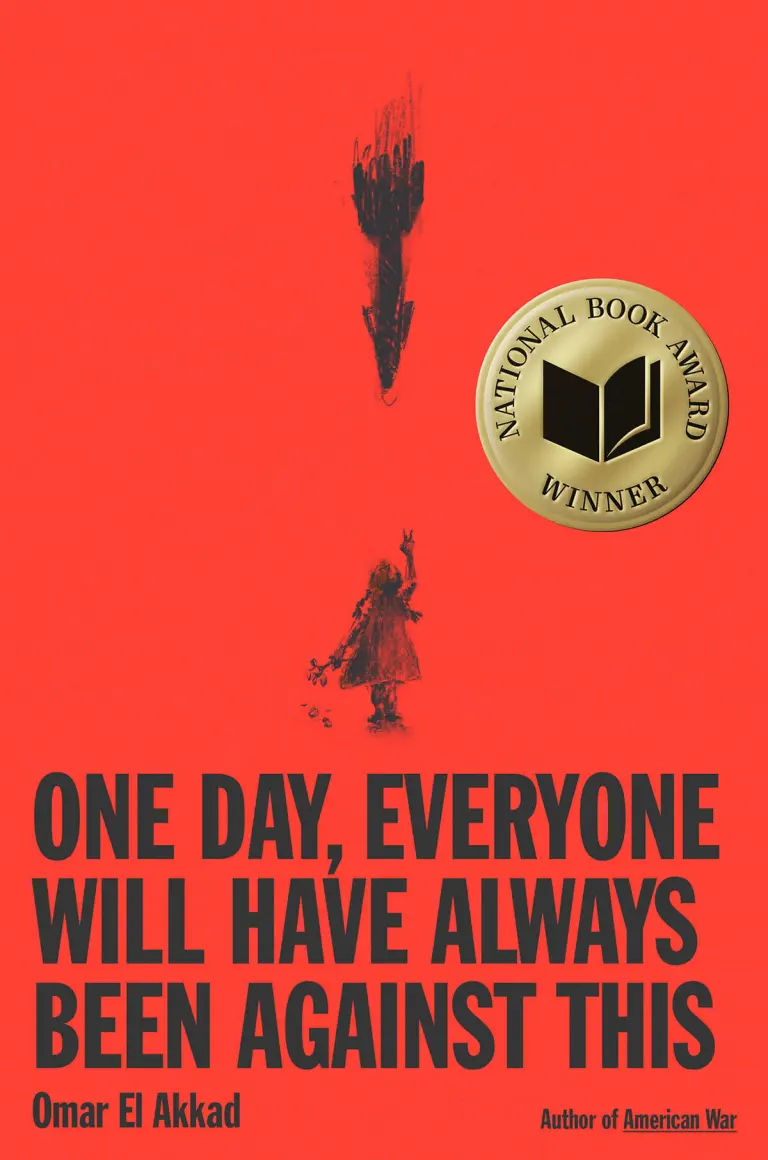
One Day, Everyone Will Have Always Been Against This

Omar El Akkad. Knopf, $28 (208p) ISBN 978-0-593-80414-8

Last spring, former journalist El Akkad's polemical memoir about the West's treatment of the Middle East reached #11 on PW's bestseller list. As we reported in that column, the book—whose title comes from a 2023 tweet the author wrote about Gaza—is El Akkad's first work of nonfiction, following the novels American War and What Strange Paradise. “It’s very difficult to think in celebratory terms about a book that was written in response to a genocide,” El Akkad said in his speech at the National Book Award ceremony in Manhattan on November 19. 

The Intentions of Thunder

Patricia Smith. Simon & Schuster, $30 (256p) ISBN 978-1-66805-572-4
Smith (Unshuttered) delivers a formidable volume of selected and previously uncollected poems. Performing the work of “desperate remembering,” Smith revels in Black joy even as she records the violence committed against Black bodies in the name of white supremacy: “We are the disappeared, desolate, and misplaced,/ dark magicians stronger than any root or conjure.” The poet’s uncanny ear and powerfully empathic imagination bring to life Black figures, from those who go unnamed in 19th-century photographs to Little Richard and the victims of Hurricane Katrina (“every woman begins as weather”). A bereaved child asks the poet to “undead” her mother, “Replacing the voice./ Stitching on the lost flesh.” An undertaker repairs the mutilated corpses of young Black men for the sake of their grieving families: “I have smoothed the angry edges/ of bullet holes. I have touched him in places/ no mother knows, and I have birthed his new face.” A pressing question throbs throughout the collection: “can poems save us?” At one point, Smith describes poems as being “only ways to layer music over hurting. Ways to say the quiet things out loud.” Elsewhere, she admits, “I really thought the words would grow to gospel in my hands.” Readers will find themselves forever changed by Smith’s spirited voice. (Sept.)

We Are Green and Trembling

Gabriela Cabezón Cámara, trans. from the Spanish by Robin Myers. New Directions, $18.95 trade paper (256p) ISBN 978-0-8112-3861-8
The beautiful latest from Slum Virgin author Cabezón Cámara is based on the real yet extraordinary life of Antonio de Erauso (1592–1650), who was raised as a girl in a Basque convent before escaping out of a desire to see the world. After Antonio sails to South America as a cabin boy, he becomes secretary to a repellent Conquistador captain. He then discovers two Guaraní girls held captive by the captain’s friend, a prelate with a “piranha-smile,” and frees them. From the jungle where Antonio has taken the girls, he writes letters to his aunt, a prioress back in Donostia, in which he alluringly recounts his adventures. The author alternates Antonio’s missives with sensuous and searing bird’s-eye depictions—literally, from a buzzard’s perspective—of the jungle and the wanton devastation taking place there. At one point, a pyre of Indigenous people’s corpses is described as a “pink waxy lagoon of white skeletons.” Antonio, in turn, seeks redemption amid the carnage, and eventually finds it in the beauty of the natural world, which offers meaning to him and the girls he’s saved. Readers will be riveted by this queer anticolonial picaresque. Agent: Sandra Pareja, Massie & McQuilkin. (June)

The Teacher of Nomad Land

Daniel Nayeri. Levine Querido, $18.99 (192p) ISBN 978-1-64614-566-9
Nayeri (The Bizarre Bazaar) considers the effects of WWII on two Iranian children in a heart-piercing historical novel. Following the death of Babak’s educator father from British cannon fire in 1941 Iran, the 13-year-old takes guardianship of his eight-year-old sister Sana. They join a group of travelers migrating through the Zagros Mountains who briefly allow the siblings to stay with them on the condition that Babak, carrying his father’s books and blackboard, teaches the other children English. Unable to wrangle the students, Babak and Sana are forced to travel to the city of Ahvaz on their own. On their journey they encounter Vulf, a threatening stranger searching for a Jewish child named Ben; after sneaking away from Vulf, the duo meets Ben, who joins them on their trek. As the children navigate each harrowing obstacle, Babak holds close wise words from his father, which drive the teen to persevere: “That is the teacher’s job—to make the world understandable in parts.” Babak’s palpable love for his sister emphasizes the novel’s suggestion that there is power in kindness, even in the face of tragedy. Lush details and taut plotting distinguish this immersive, profound offering. Ages 8–12. Agent: Joanna Volpe, New Leaf Literary. (Aug.)