November is Native American Heritage Month, and the fall has brought a dazzling slate of noteworthy new books by Native American authors. We're highlighting a small fraction of those, as picked by PW's editors, including a poetry anthology, a cookbook, and a provocative, form-breaking work of speculative fiction.
Check out our list below.

Edited by Stacie Denetsosie, Kinsale Drake, and Darcie Little Badger. Torrey House, $18.95 trade paper (240p) ISBN 979-8-89092-030-0
This beautiful anthology of poetry and prose by contemporary Native American writers includes traditional motifs along with works of stark feminism and hopeful futurism. The poem “The Rhythm of Becoming” by Dominique Daye Hunter evokes the cadence of oral storytelling (one quatrain begins, “Ni:ska learns the old songs,” followed by the line “She learns the old songs,” which is then repeated twice). A.J. Eversole’s appealing and mischievous story “Dilasulo Walks” is narrated by a pair of moccasins on display in a Dallas museum. The moccasins have a conversation with a Native artist visiting the museum, with whom they agree that “art should be admired, but shoes should be worn,” prompting the artist to walk out with them on her feet. Arielle Twist laments violence against Indigenous women in the poem “In the beginning, it’s just you and me against the world,” in which a daughter worries about how “moms can go missing and die.” In Moniquill Blackgoose’s visionary “Sky Woman Rising: A Memoir,” a storyteller tells a group of children in the 2050s about how their people built the Sky New World, explaining that while many of them left Earth for the utopia, some stayed behind to “preserve and restore” their ancestral land, in the hope that someday they can all return. Readers will find a wide assortment of riches on offer here.
(Nov.) 
Vanessa Lillie. Berkley, $30 (368p) ISBN 978-0-593-55014-4
In Lillie’s potent sequel to
Blood Sisters, Cherokee archaeologist Syd Walker probes a constellation of cases rooted in centuries-old tensions between Native Americans and European colonizers. After her boss retires and she’s promoted within the Rhode Island Bureau of Indian Affairs, Syd receives a startling voicemail on her predecessor’s phone: “We found the remains at the back of the camp.” The caller, it turns out, works at Camp Quahog, a summer camp run by the Founders Society, whose members trace their ancestry back to the
Mayflower. Syd heads to the camp and identifies the remains as those of a female baby who died 300 years earlier. Then the remains vanish, and Syd learns that it’s just the latest in a series of similar disappearances. Meanwhile, a young Native woman—and former BIA intern—named Naomi is reported missing. As Syd investigates the thefts and tries to track down Naomi, she uncovers dark secrets about the Founders Society that suggest foul play. Lillie goes even deeper and darker than she did in the previous installment, folding powerful questions about who gets to write history into a crackling mystery plot. This series has legs.
Agent: Jamie Carr, Book Group. (Oct.) 
Daniel H. Wilson. Doubleday, $30 (288p) ISBN 978-0-385-55111-3
Wilson (
Robopocalypse) draws on his Cherokee heritage to meld Native American and scientific knowledge into a stunning phantasmagoric first contact tale. When an encounter with deep-space Voyager crafts triggers an alien probe to race toward Earth, a long-dormant alien mechanism on the planet awakens and begins to bring its dreams to life, alerting a handful of sensitive people to its existence. Gavin Clark, chasing UFO reports, links up with NASA scientist Mikayla Johnson, who deciphers the alien probe signal as a series of human voices shrieking. Meanwhile oil field worker Jim Hardgray, while trying to reunite with his estranged daughter, Tawny, begins to see visions of his Cherokee ancestors and to wonder if the burial mound near his single-wide trailer is as charged with spirits as his mother-in-law warned. Wilson neatly entangles the most modern tech, like quantum computers that accurately foretell the future, with ancient beliefs that retain enough power to motivate contemporary folks. Like the best
X-Files episodes, this story uses the alien character to bring out the human elements in vivid detail. It’s a masterful feat.
Agent: Laurie Fox, Linda Chester Agency. (Oct.) 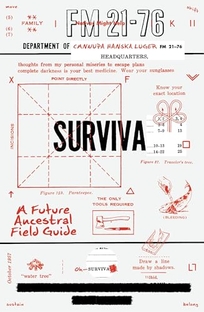
Cannupa Hanska Luger. Aora, $36.95 trade paper (160p) ISBN 978-1-961814-26-4
Interdisciplinary Native American artist Luger delivers a daring work of speculative fiction set in a future in which the wealthy and non-Indigenous have fled the Earth they ravaged. This audacious hybrid work, which adapts a vintage Army wilderness survival manual, alludes to the difficult work of thriving that follows for those left behind. Luger’s fruitful defacement of the original text dazzles and provokes; there are black-ink redactions with stray advice about soup and salamanders peeking through, and “Act like the Natives” scrawled over the top of the former military script. Also featured are mysterious figures, often in furs and elaborate horned headgear, layered over vintage sketches of bear traps, bamboo beds, edible roots, and banded snakes. Bursts of poetry (“We are vessels to hold and to share, to protect and keep safe”) serve as a challenge to non-Indigenous ideas about “survival” itself. The Army manual assumes an adversarial relationship to nature, but Luger makes a persuasive case that “union is the natural order.” This singular act of creative destruction, more thought experiment than narrative, rises like a flower out of rubble.
(Sept.) 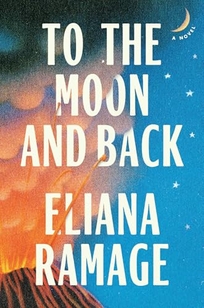
Eliana Ramage. Avid Reader, $30 (448p) ISBN 978-1-6680-6585-3
The touching debut from Ramage focuses on a young Cherokee woman’s struggle to become the first Native American astronaut. In 1990s Oklahoma, 13-year-old Steph Harper longs to attend Space Camp and applies to a private school, hoping it will put her on the path. Rummaging through her mother’s purse, she finds a scholarship offer from the school and is bereft to realize she’s missed the deadline to accept, and that her mother kept the news from her (“I saw my mother holding me back, so afraid... that she’d force on me a small life”). Steph never loses her ambition to travel to space and eventually attends a private college in rural Connecticut, where she has a tumultuous romantic relationship with fellow Indigenous student Della. After drifting through a series of online hookups in graduate school, Steph is chosen for astronaut training in Hawaii, but tensions arise when her younger sister arrives to protest NASA’s installation of a large telescope on sacred Indigenous lands. While Ramage sets a leisurely pace at the beginning, readers will be rewarded once Steph starts to achieve small victories in her quest. It’s a satisfying exploration of a woman’s determination to realize her potential.
Agent: Meredith Kaffel Simonoff, Gernert Co. (Sept.) 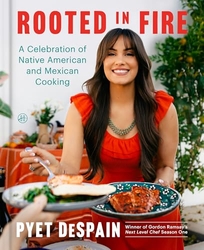
Pyet DeSpain. HarperOne, $34.99 (288p) ISBN 978-0-06-330407-9
Next Level Chef winner DeSpain celebrates her Potawatomi and Mexican heritage in this vivid debut. Offering a wealth of historical context, DeSpain celebrates the accomplishments of her ancestors, noting that Indigenous people discovered maple syrup and sugar production as well as intercropping, the process of growing the “three sisters” (corn, beans, and squash) together. She also shares a number of traditions practiced today, explaining, for example, that a “spirit plate” containing a small portion of every dish is created before large meals as a “ceremonial offering used by several Native American tribes throughout the country... as a gesture of respect and gratitude to the spirits.” Using staple ingredients native to North America, DeSpain showcases traditional dishes such as three sisters salad, bison and sweet corn soup, and steamed white fish in corn husks, as well as her original creations, including roasted butternut squash with honey and habanero, blue corn strawberry tamales with coconut horchata sauce, and raspberry mezcal BBQ quail. Other highlights include jalapeño bison jerky, amaranth-crusted acorn squash, and a cake made with mezcal and Mexican chocolate. This will be a valuable resource for home cooks looking to learn more about Indigenous foodways.
Agent: Johanna Castillo, Writers House. (Nov.) 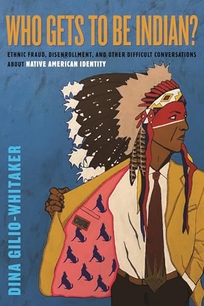
Dina Gilio-Whitaker. Beacon, $29.95 (280p) ISBN 978-0-8070-4496-4
Journalist Gilio-Whitaker (As Long as Grass Grows) exposes how Indian identity is commodified in this provocative takedown of America’s tribal politics. Spurred by frustration over her own “blood quantum”-determined status as a “descendant” but not, as her mother is, an enrolled member of the Colville Confederated Tribes, Gilio-Whitaker examines the history of “pretendianism,” or white entertainers passing as Native. She tracks the phenomenon from 19th-century theatrical performances like Buffalo Bill’s Wild West through the 20th century, when “the growing ethnic renewal movement” and new census rules that allowed for self-identification led to a surge of pretendianism. This history sets the scene for Gilio-Whitaker’s ruthless, stringently cited allegation of pretendianism against Sacheen Littlefeather, who famously declined the Oscar on behalf of Marlon Brando in 1973. (Littlefeather contacted the author to ghostwrite her memoir in 2016, but later backed out; Gilio-Whitaker speculates it was because Littlefeather wanted to avoid questions about her heritage.) Gilio-Whitaker calls out Native Hollywood insiders who continue to prop up Littlefeather—naming multiple industry gatekeepers—and, in a stunning tie-it-all-together twist, demonstrates how these bigwigs are “incestuously” entangled with the “casino capitalism” that has created the “tribal disenrollment crisis,” an ongoing process by which tribes oust members in order to raise per capita payouts. This incendiary j’accuse isn’t afraid to name names. (Oct.)






 Beyond the Glittering World