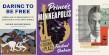





The author argues in The Blood Countess that notorious 17th-century Hungarian noblewoman Elizabeth Bathory was wrongly accused of killing 650 women and girls.
What inspired you to seek the real story behind Elizabeth Bathory’s legend?
The first time I encountered Elizabeth Bathory was on an ill-advised tour of the castle ruins of Slovakia in my 20s, before there was tourist infrastructure. I hadn’t heard of her till then. These days, Bathory has a lot of pop culture currency; she’s a niche villain in a lot of media. I thought it was a great time to reevaluate the story. It’s one of history’s biggest cold cases.
I was curious, can we solve it now?
What surprised you in your research?
How politically active some women were in this time period. Women put on armor and fought alongside men, ran estates, and were esteemed as healthcare providers.
How do you see Elizabeth Bathory now?
She suffered from having been raised in too progressive an environment. If, like she was, you’re raised with a mother who wants to head up the Reformation and aunts who are taking everyone to court, what you think is possible is constantly clashing with reality.
What role do you think gender played in the accusations against Bathory?
If you wanted to go after a male political rival, there was one way to do it: meet them in battle and do away with them. But there was a paradox with women. They were seen as not political creatures—they couldn’t be by definition. But then, how do you dispatch a political woman rival? In that case, gender plays a role not just in terms of the misogyny itself, but in what the playbook is to get rid of her: discredit her with lurid accusations.
How do you think her story relates to society today?
I was surprised at the tangible connections with QAnon. I started to see a straight line from the Satanic panic, Pizzagate, and QAnon all the way back to Elizabeth Bathory. I also see parallels to today regarding the emergence of brand-new tech—in Bathory’s case, the printing press—that enables the spread of disinformation.
You mentioned the pop culture industry based on Bathory’s myth. Do you hope that changes?
It’s fun to be scared and have these shared stories, but so many are built on the suffering of innocent people. Every time we trot Bathory’s story out, we’re conspiring with the people who conspired against her.
What do you hope readers take away from the book?
I’d like to push back on this idea of incremental progress. We assume we’re growing increasingly sophisticated and progressive. But history shows us that’s not necessarily the case. If we are still buying into the superstitions and smears of the 17th century, how progressive are we?